Operations Systems
Every job, who owns it and what's late.
- Job and task flow
- Ownership and status
- Exception handling
Systems consulting & development
Most businesses don't need more software. They need better systems. We learn how your operation runs, work out what it should be, and build it.
Operating model
The problem
What worked with five people breaks at twenty. Work lives in spreadsheets, people chase updates, and the office becomes harder than the job.
What we do
In that order. Picking software first is why most business systems disappoint.
How the work really runs, including the workarounds nobody mentions.
What the system should be, before anything gets built.
The screens, data, workflows and integrations.
Tuned as the business changes.
Types of systems
Not fixed packages — the shapes the work usually takes.
Every job, who owns it and what's late.
Tools built to your process, for the jobs no off-the-shelf software handles.
The numbers pulled together for you, not rebuilt by hand each month.
Site details, photos and pricing in one flow. Quote out the same day.
Connect what you already use and cut the double handling.
Quotes, contracts and compliance packs generated and filed.
Consulting or build
You don't need to know which you need. We start with the operation and go from there.
Advise & architect
Map the process, design the system, and hand you a plan for what to buy, connect or build.
Design & build
We build the interfaces, data, workflows and integrations, then keep tuning them as the business changes.
Starter systems
These are the bare-bones templates we built ourselves. Your system starts around one of them and gets built out around your process.
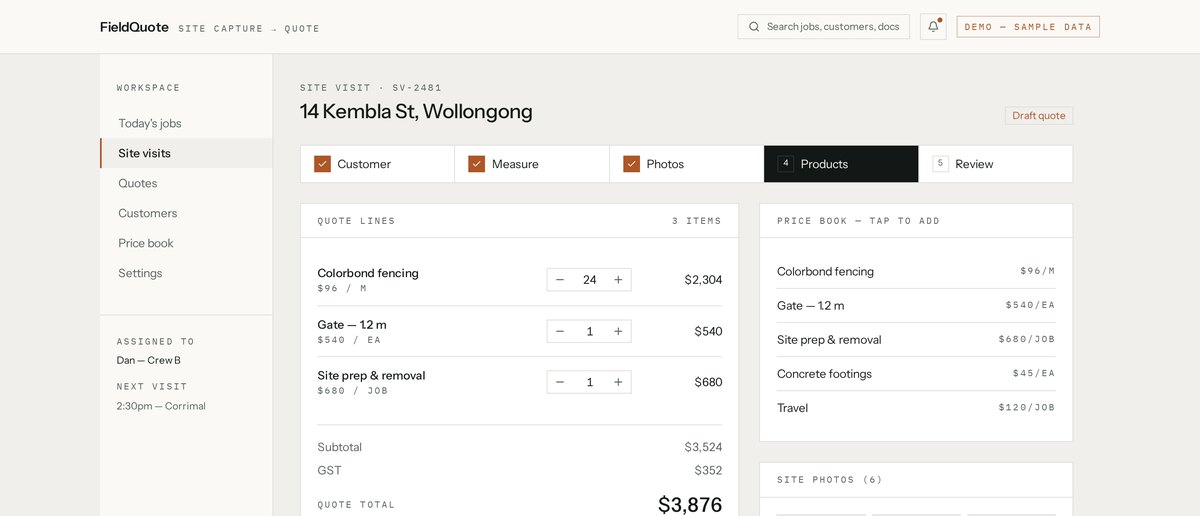
Capture the site, price the job and send the quote before you leave.
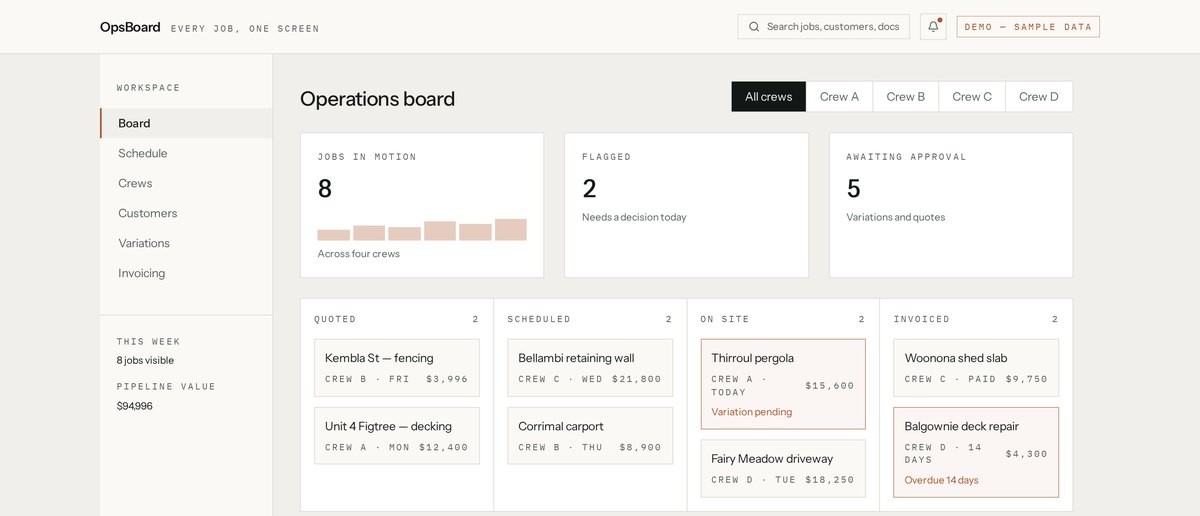
One board showing every job, who's on it and what's late.
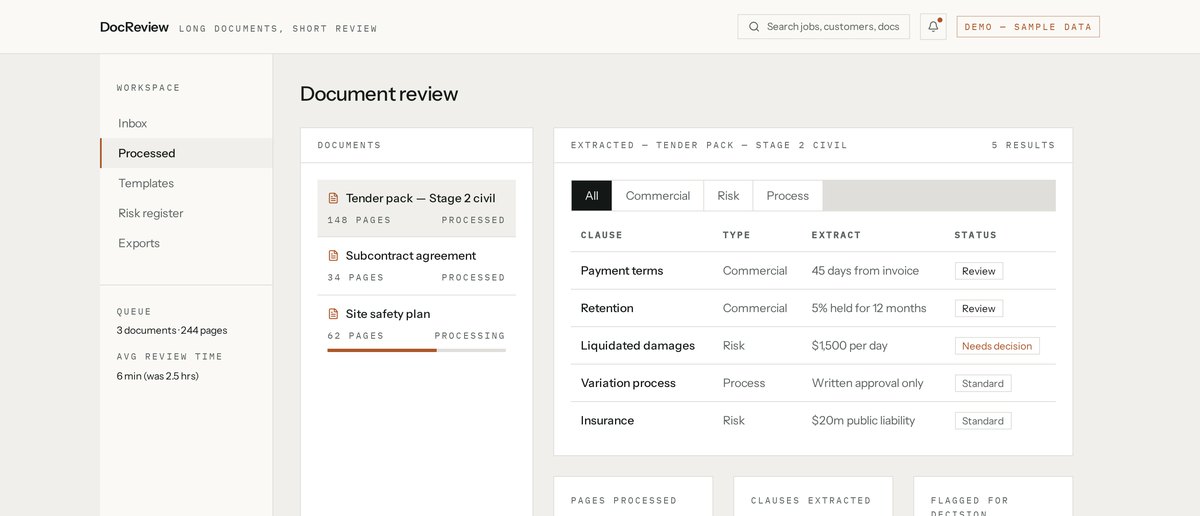
Reads long documents and pulls out what matters for a five-minute review.
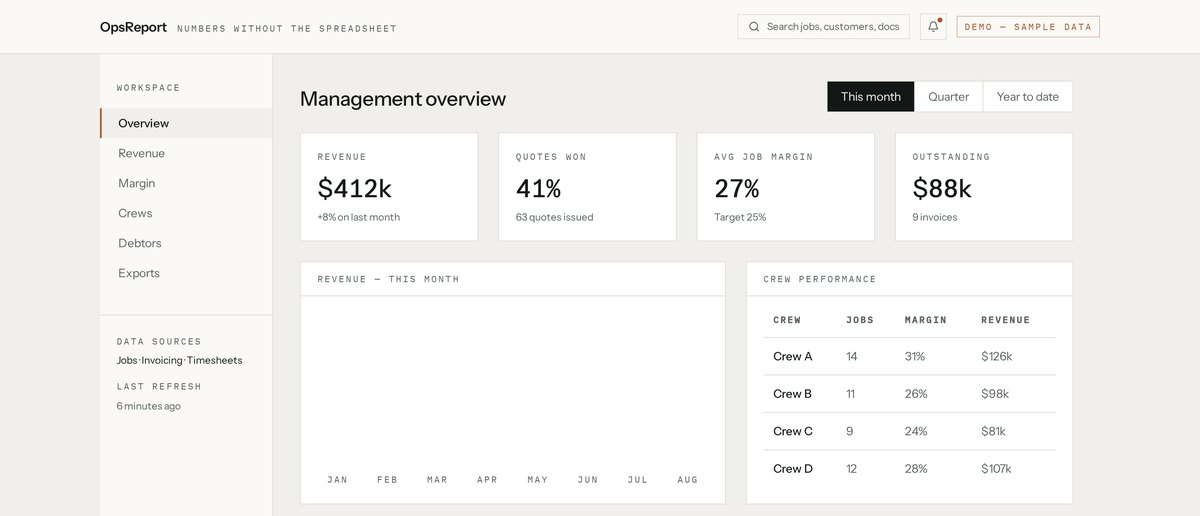
Revenue, margin, jobs and cash on one dashboard. No spreadsheet night.
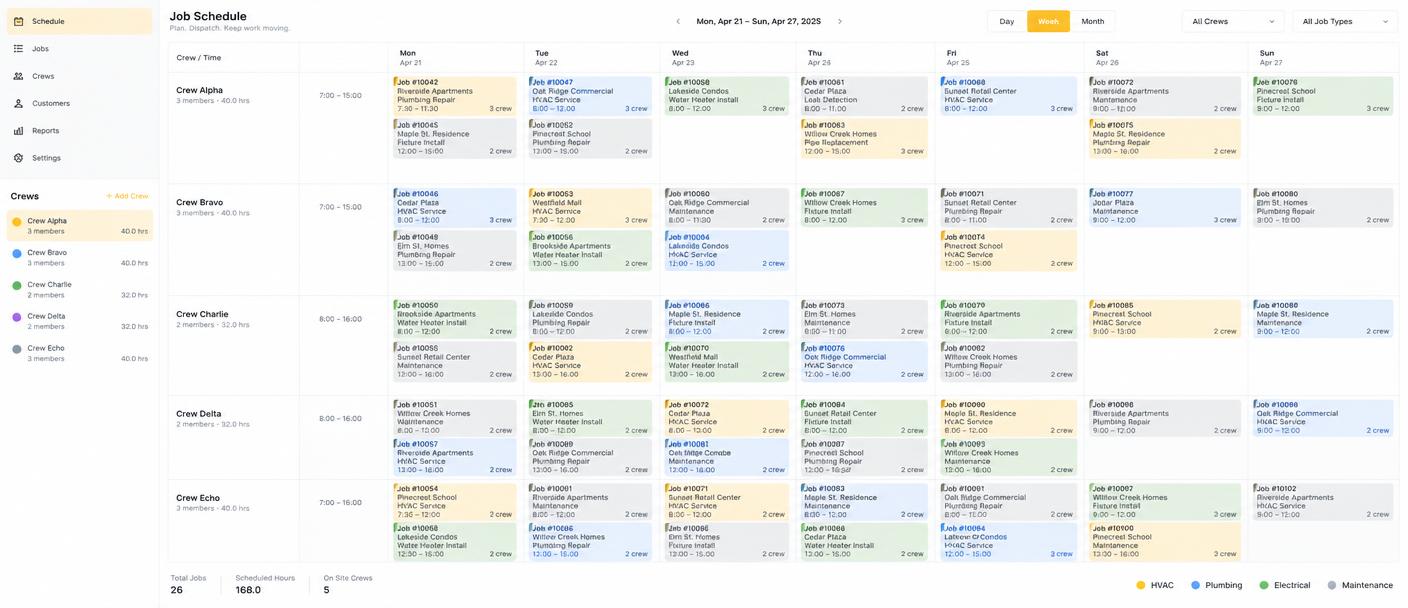
Drag jobs onto the week, see every crew's load, and spot the gaps before they cost you.
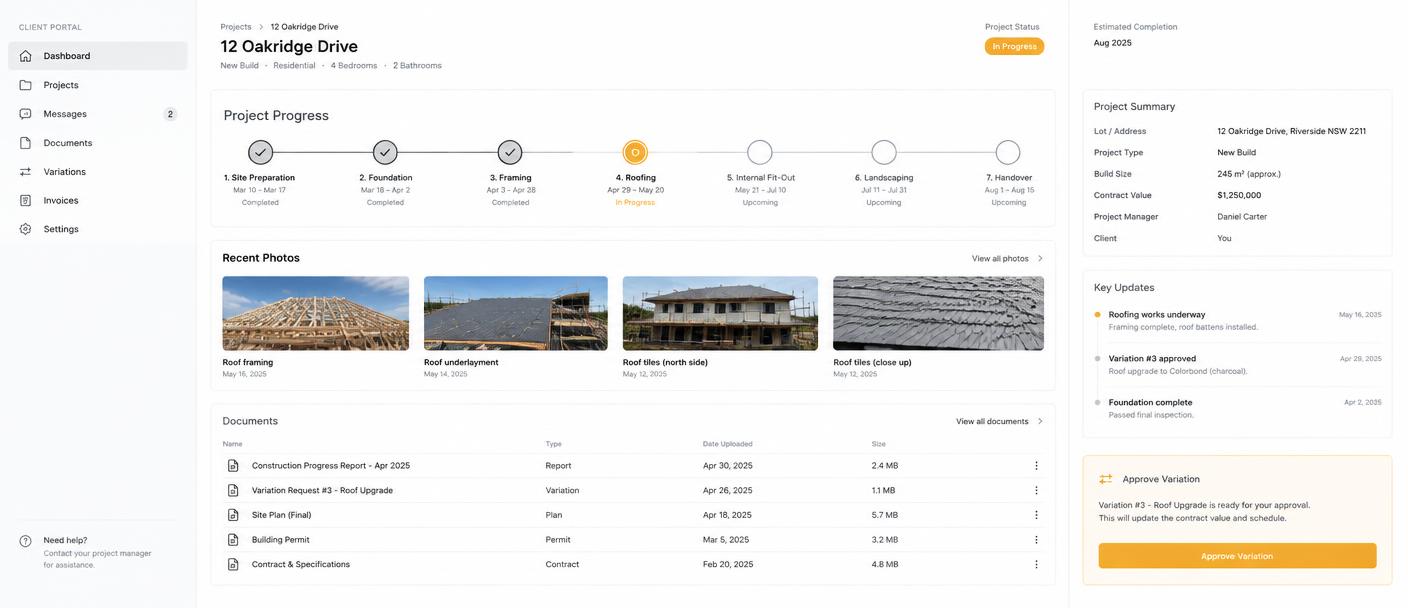
Clients see progress, photos and documents themselves — instead of ringing you.
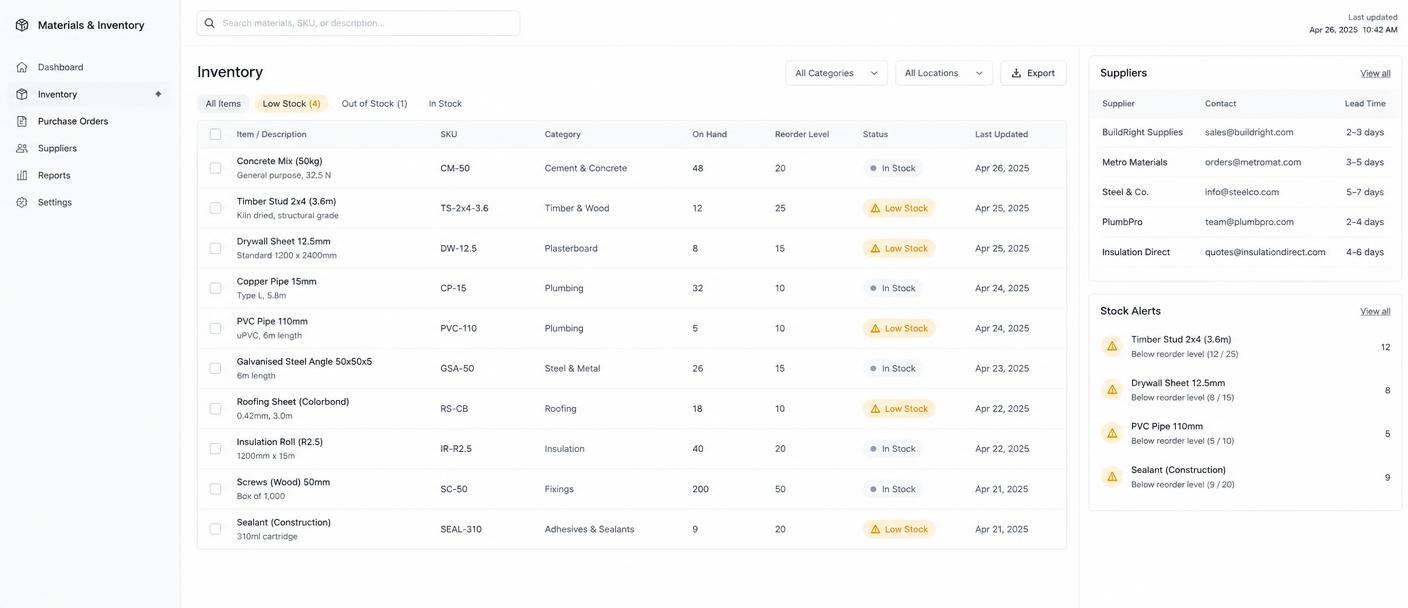
Know what's on the shelf, what's on order and what's about to run out.
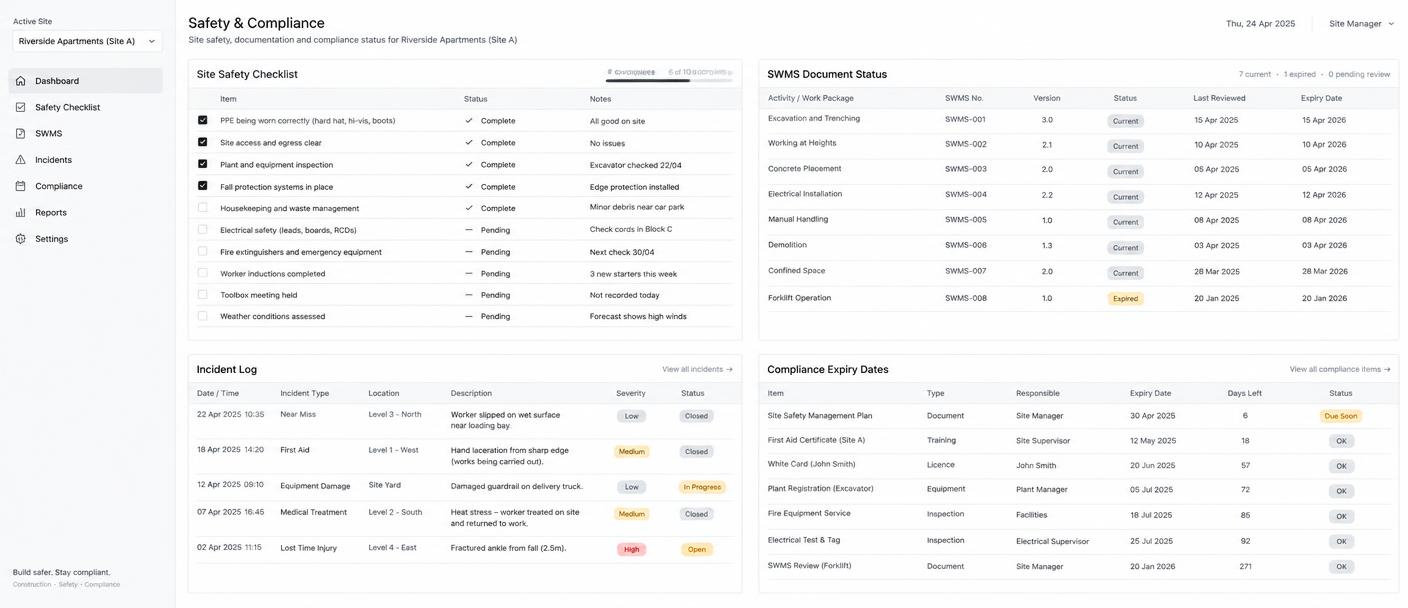
Checklists, SWMS and incident logs in one place — audit-ready without the filing cabinet.
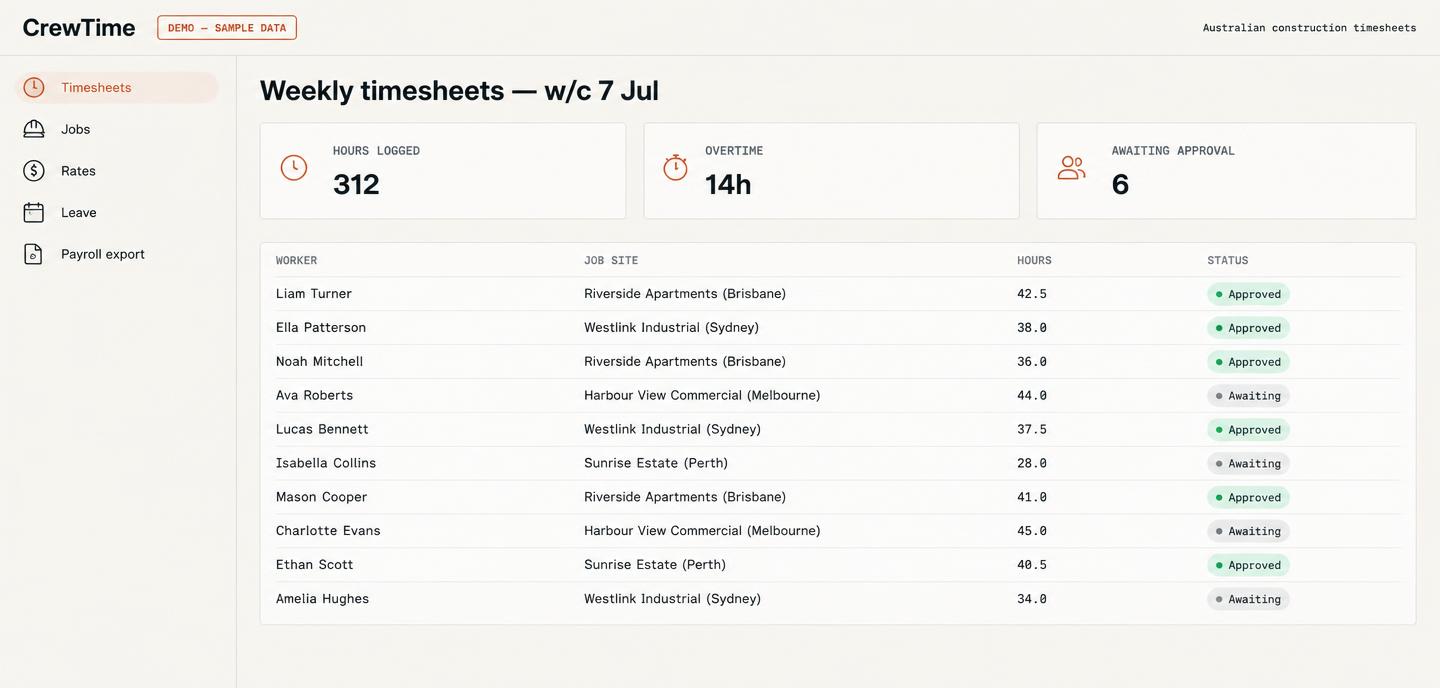
Crews clock on from their phones, hours land against the right job, and payroll is an export — not a Sunday night.
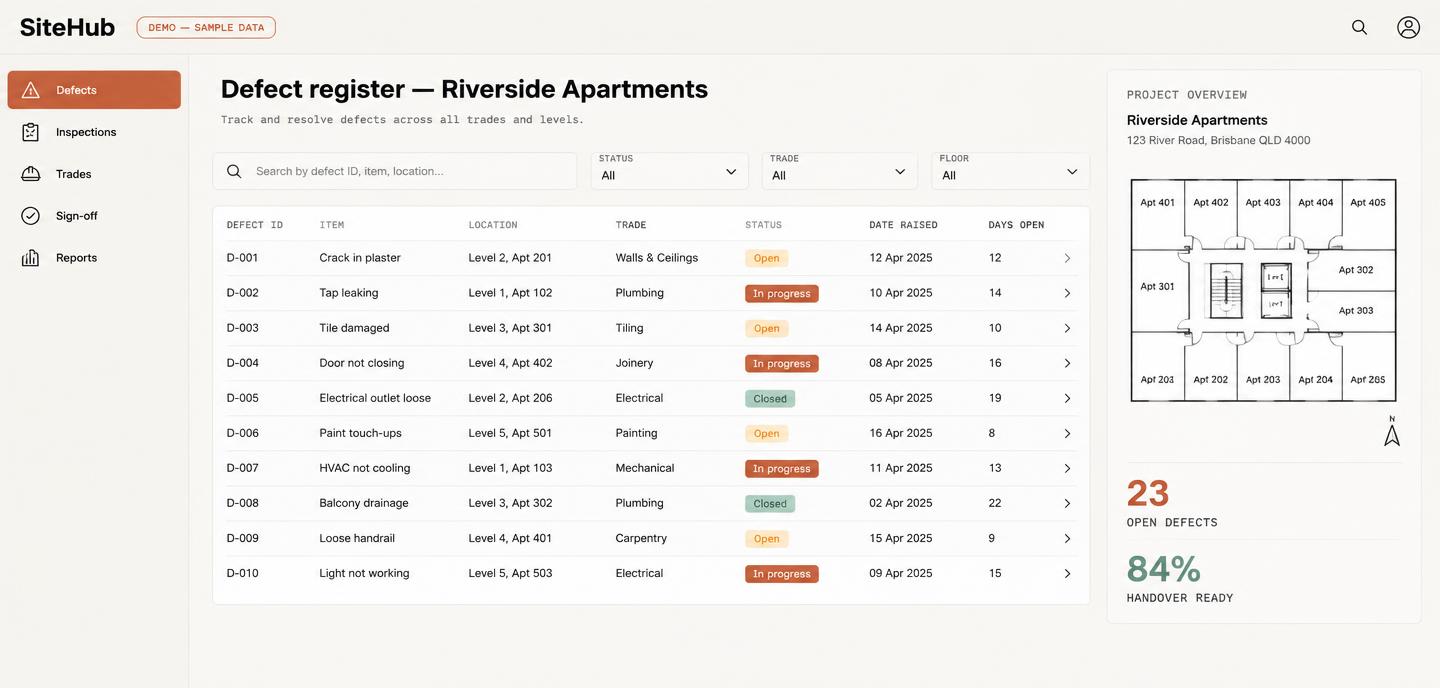
Walk the site, pin every defect, assign it to a trade and track it to closed — handover without the spreadsheet.
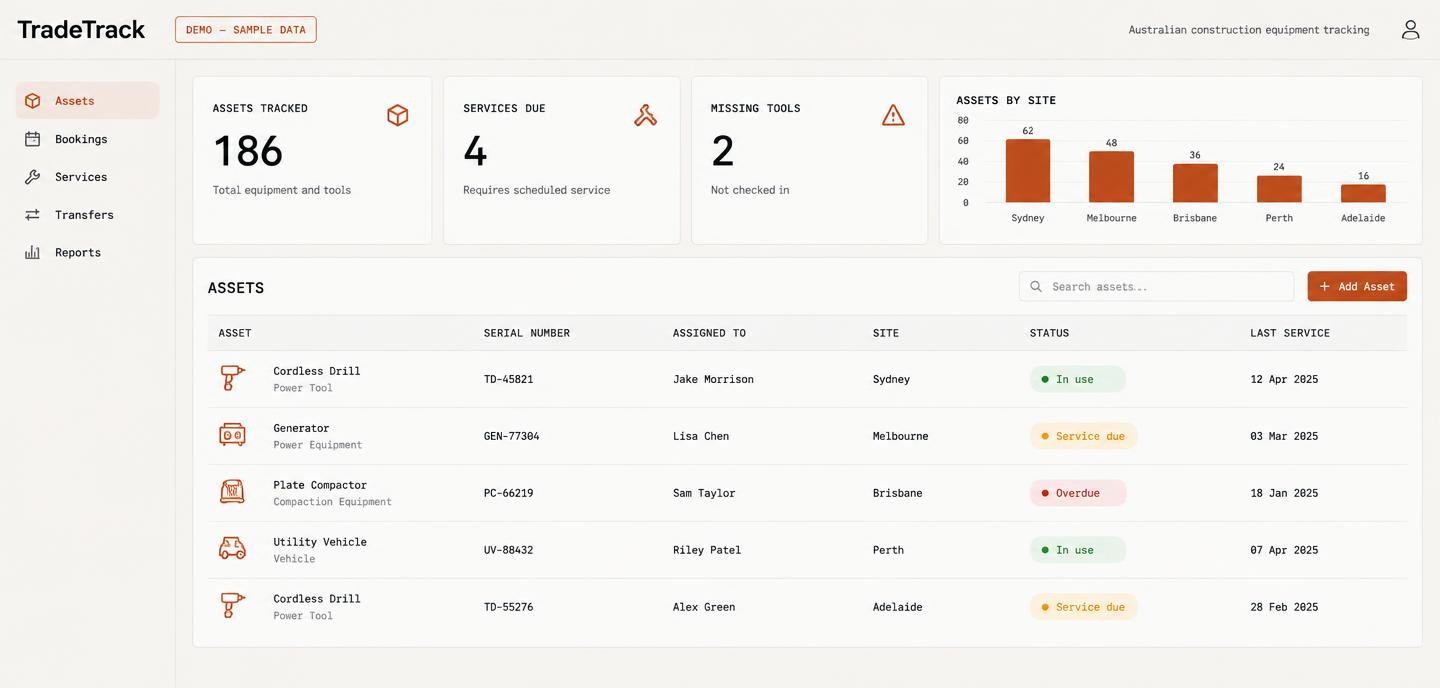
Every tool, ute and machine has a home, a service date and a name next to it. No more 'who's got the nail gun?'
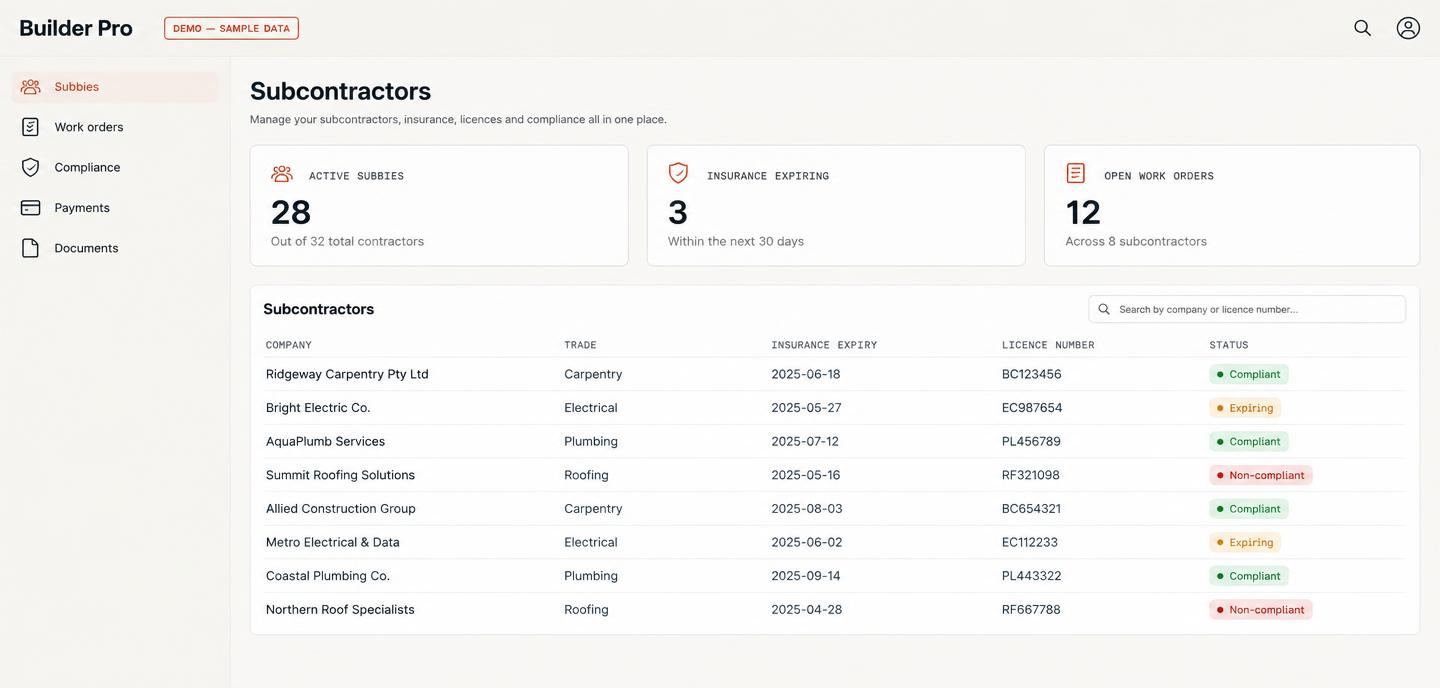
Insurances, licences, work orders and payments for every subbie — expired paperwork flags itself before it becomes your problem.
Next step
Tell us what's going wrong. We'll work out what the system should be.